
The Cast AI blog
Guides, tutorials, and tips on Kubernetes automation, from cost optimization to cloud security and everything in between.
Database Caching, Connection Pooling, and AI Index Recommendations in One Tool
The Problem Nobody Wants to Own Someone on your team owns the database. It probably isn’t a job title anyone holds. It’s the engineer who set…
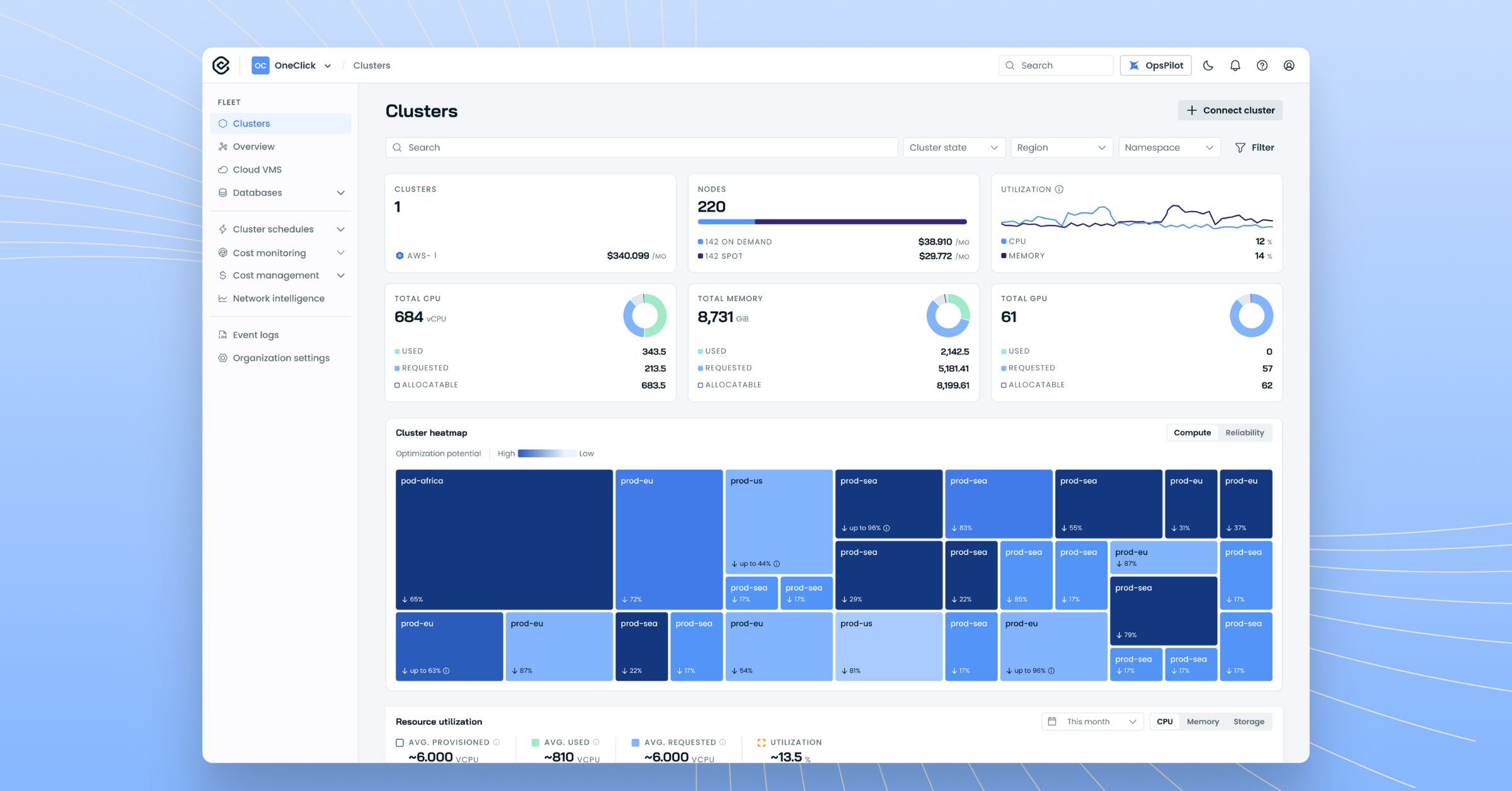
New Cast AI Console Experience
We rebuilt the Cast AI console around how you work, not how we ship features.
AKS Cost Optimization: The Real Fixes Under the Hood – NAP, VPA, Spot, and Commitments
AKS clusters often carry the worst utilization metrics in cloud compute — but there’s no…
Cast AI vs SkyPilot: Two Approaches to Finding GPUs Across Clouds
SkyPilot and Cast AI take different approaches to GPU infrastructure, and the right fit depends…
Kubernetes Configuration Drift: How to Detect It and What It Costs You
Kubernetes configuration drift occurs when actual cluster state diverges from what Git or Helm declares,…
GPU Job Queueing with Kueue and DRA: Scheduling AI Workloads Without Idle Capacity
Kueue and DRA help Kubernetes manage GPU capacity more efficiently by queuing workloads until resources…
Migrating from Kubecost to Automated Optimization: What Changes and What to Keep
Moving from Kubecost to Cast AI is mainly about planning the transition. Keep your existing…
How Cast AI’s Automation Decides: The Guardrails, Rollbacks and Evidence Behind Each Action
Safe Kubernetes automation requires more than utilization metrics. This post explores how SLO signals, pre-flight…
Reducing Kubernetes Toil: A Ranked List of What to Automate First
Kubernetes toil grows with cluster scale, but not every task is equally worth automating. This…
What Is AI SRE, and Where Does Cost Automation Fit?
AI SRE goes beyond observability and AIOps into incident investigation, root cause analysis, and remediation.…


4.8/5 250+ reviews