
Autonomous database optimization
DBO continuously analyzes your production database traffic, finds risks before they become incidents, and shows your team what to do next.
Trusted by 2100+ companies globally



Key features
Database optimization, deployed in minutes
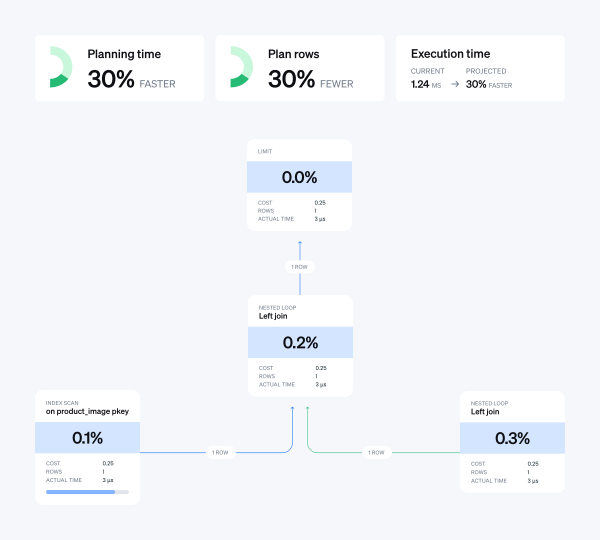
Performance recommendations
Get the exact index or rewrite to ship, backed by before and after query plans.
- Built from your actual production traffic, not synthetic benchmarks.
- Before/after execution plans show projected impact first.
- Apply with confidence , no trial and error on live data
In-memory cache
Cut tail latency and CPU headroom risk without touching application code or planning a migration.
- Repetitive selects served from cache, up to 400x faster
- Smart SQL-level invalidation on every write, no stale data
- Auto or manual modes — let DBO decide or set rules per query.
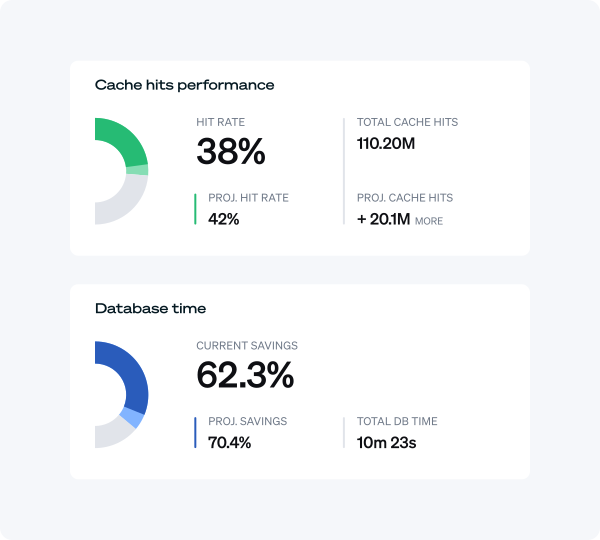

Automated caching
Identify caching opportunities using advanced machine learning to detect patterns in query traffic automatically.
- Continuously adapt to changing query patterns in real-time.
- Autonomously optimize cache configurations at scale, achieving efficiency levels beyond manual tuning
- No configuration or application-side coding necessary
Connection pooling
Consolidates hundreds of microservice connections into a managed pool, freeing the CPU consumed by connection overhead and churn.
- Stops connection storms from taking production down.
- One fewer infrastructure component — drop the proxy line item.
- Transparent to your app, just update the connection string
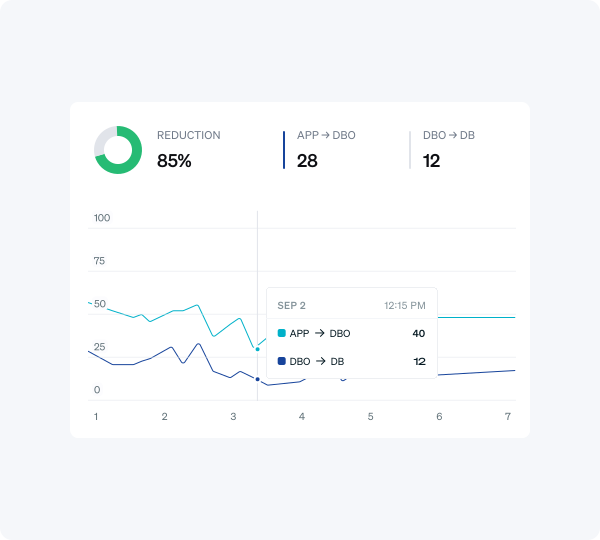
Read-only to start
Nothing is rewritten or rerouted. Observes production traffic, live in under 15 minutes.
Automatic TTL configuration
No need to set TTLs for your queries. DBO finds the optimal ones for you.
Built-in failover
Maintain connectivity by dynamically routing traffic–no client-side changes needed.
Automated database discovery
Auto-discovers Postgres and MySQL databases, then you choose which ones DBO covers.
Passthrough mode
Not ready to cache yet? Enable passthrough for full query visibility and projected performance.
One connection string
Transparent to your app — just update the connection string, drop the proxy line item.
Setup database agent
Get started in two steps
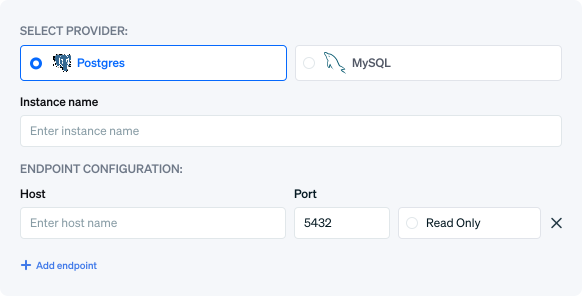
Configure DBO for your database.
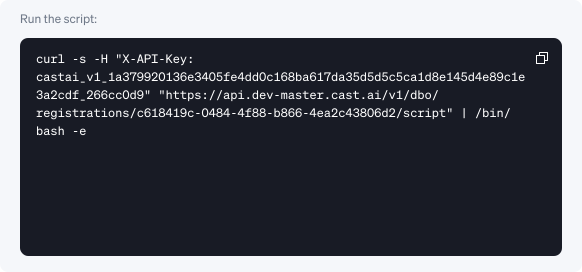
Install DBO Agent in your cluster.
Case study
Flowcore achieves cache hit rates of 80-90% and significantly improves performance
“One of the toughest challenges with database caching is cache invalidation. But with Cast AI’s DBO, it just works right out of the box. If you’re thinking about adding a cache, DBO is an easy choice.”

Julius Á Rógvi Biskopstø
Co-Founder / CTO
Case study
Akamai optimizes read-heavy workloads automatically, saving costs
“Autonomous caching is one of the most effective ways to optimize database-heavy workloads, and Cast AI’s approach is brilliantly executed. DBO removes the need for manual tuning while delivering real-time performance gains and cost reductions. It’s a strong addition to the Cast AI platform.”

Dekel Shavit
Sr. Director of Engineering
Learn more
Additional resources

Blog
Qwen2.5:14B vs. GPT-4o-mini: Which One Is Cheaper at Scale?
Discover how you can optimize LLM cost without sacrificing performance.

Docs
Database Optimizer – Introduction and Key Benefits
Learn more about DBO in our product pages – explore how our AI-driven database cache works.

Blog
Cloud Cost Optimization: 5 Impactful Tactics For 2025
Cloud cost optimization is the best way to manage long-term cloud costs – and automation helps.
FAQ
Your questions, answered
Cast AI DBO is an autonomous caching solution that improves database query performance, reduces database load, and lowers infrastructure costs without requiring code changes, configuration, or manual tuning.
DBO acts as a transparent proxy between your application and database, automatically caching frequently accessed query results and serving them at sub-millisecond speeds, while intelligently invalidating cached data when changes occur.
DBO is designed to accelerate read-heavy workloads, including SaaS applications, APIs, microservices, and transactional systems, especially those with stateful workloads or long-running jobs that are sensitive to database performance.
DBO is deployed as a lightweight proxy within your architecture. To deploy it, simply update your application’s database connection string to point to DBO. No code changes or application rewrites are needed.
DBO initially supports PostgreSQL and MySQL, with additional database engines planned on the roadmap. Please contact the Cast AI team for the most up-to-date compatibility details.
DBO uses real-time query analysis and a smart invalidation engine to automatically detect when cached data becomes stale and remove or refresh it, ensuring applications always receive accurate results.
Out of the box, DBO works fully automatically, but advanced users can customize caching policies if needed.
Customers typically see significantly faster query response times, reduced database CPU and I/O load, improved resource efficiency, and lower cloud database costs — all with minimal operational effort.
Can’t find what you’re looking for?

4.8/5 50+ reviews